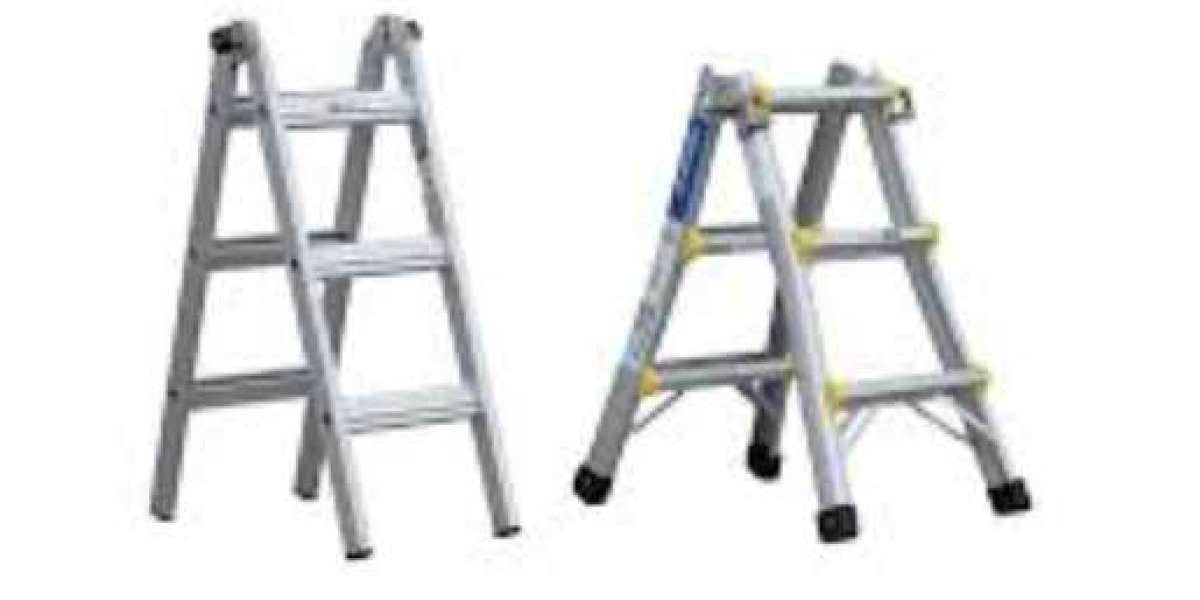

In factories, warehouses, maintenance corridors, and loading areas, the Industrial Ladders Series is often the difference between smooth movement and unnecessary delay. When teams choose an Industrial Ladders Series that matches their workflow, they reduce hesitation, save time, and make routine access feel more controlled. The best models do more than lift people upward; they support repeated use, handle demanding environments, and help workers stay focused on the task instead of on the equipment beneath them. In busy industrial settings, that kind of confidence matters because every step must feel deliberate, stable, and efficient.
Designing Access Around Real Operations
Industrial workplaces rarely follow a perfect pattern. Some spaces are narrow, some surfaces are uneven, and some jobs change from one hour to the next. A ladder that works in theory may still fail in daily use if it cannot fit the environment. That is why design should begin with real movement, not with appearance alone. Workers need tools that open quickly, position easily, and remain dependable when conditions are busy or crowded. When access equipment is shaped around actual site needs, it becomes easier to keep operations flowing without unnecessary pauses. The right ladder should feel like a practical extension of the workday, not like an obstacle that must be managed.
Stability That Supports Repeated Use
Consistency is one of the most important qualities in any industrial tool. A ladder used once in a while may survive with minimal attention, but a ladder used every day has to prove itself again and again. Stability is not just about weight capacity; it is also about how the ladder behaves under pressure, how securely it stands, and how confidently it supports movement during repeated climbs. Workers often notice small details first, such as whether the frame feels balanced or whether the contact points remain steady on different flooring surfaces. Those details shape trust. When a ladder remains predictable from one shift to the next, people can work faster and with less mental effort.
Zjaopeng and the Value of Clean Engineering
Industrial buyers often look for products that solve multiple problems at once. A smart ladder should combine strength, convenience, and storage efficiency without making the user think twice about setup. Clean engineering helps achieve that balance. Simple folding action, manageable weight, and clear structural logic all make a difference in a space where equipment must be moved frequently. A well-made ladder also supports maintenance staff, warehouse crews, and facility managers who need dependable access without wasting time on complicated adjustments. In that sense, the product becomes more than a tool; it becomes part of the system that keeps the workplace organized and productive.
Training Habits That Reduce Risk
Even the most reliable ladder performs best when people use it with care. Good habits make a strong product even better. That means checking the surface before climbing, ensuring the ladder is fully opened and locked, and avoiding rushed movement when carrying tools or parts. It also means using the right ladder for the job instead of stretching beyond a safe range. Simple training can prevent many common problems because workers learn to respect both the equipment and the task. When safety becomes routine, not optional, the entire operation benefits. Fewer interruptions, fewer mistakes, and fewer injuries all contribute to a more stable work environment.
Small Details That Improve Daily Efficiency
Industrial sites often improve through small, practical decisions rather than dramatic changes. A ladder with a better grip, a more intuitive fold, or a more compact storage profile can save time every single day. Those savings may seem minor at first, but over weeks and months they add up across teams and shifts. Better efficiency also improves morale because people spend less energy dealing with avoidable friction. Instead of working around bad equipment, they can focus on the real job. In that way, a carefully chosen ladder supports both performance and professionalism, helping a facility operate with a clearer sense of control and purpose.
When a workplace chooses equipment that is built for real conditions, the benefits show up in movement, speed, and confidence. The most effective ladder solutions are the ones people trust without needing to think about them. For more product information, visit https://www.zjaopeng.com/product .