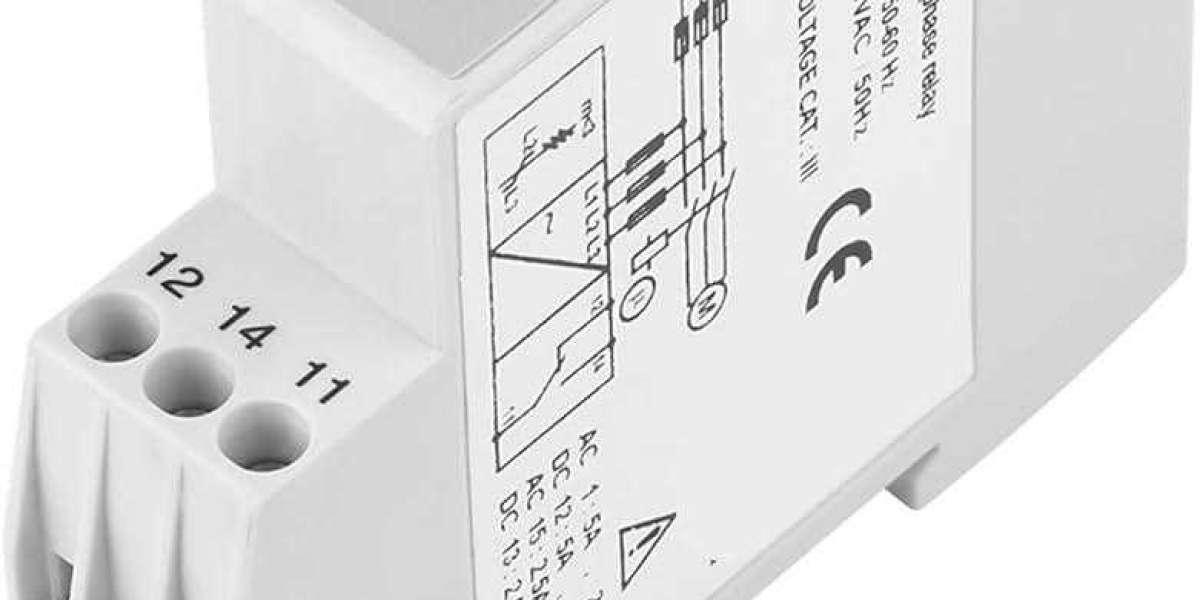

YOSHINE Phase Sequence Monitor Factory is one of those places that does not look complicated at first glance, but the more you pay attention, the more you realize everything is built around keeping things steady.
Walk through a production floor like this and the first thing you notice is not speed. It is rhythm. Parts move, but nothing feels rushed. Materials come in, get sorted, checked, then move forward in a way that feels almost routine. That routine is doing more work than it seems.
Early on, most of the effort goes into preparation. Components are laid out, checked again, sometimes adjusted before they even reach assembly. It feels slow if you are only looking at output numbers, but it prevents a lot of small issues from showing up later.
Then things start coming together. Circuits are built, connections are fixed, outer structures are put in place. It is repetitive, but that repetition is where consistency comes from. One unit should not feel different from the next, even if they are built hours apart.
Testing is where people tend to slow down even more. Each unit gets checked, not just once, but across repeated conditions. It is less about passing a single check and more about making sure behavior stays the same again and again. That is what people rely on once these parts are installed.
What stands out after a while is how the line deals with change. Not every order is identical. Some need slight adjustments. Maybe a different configuration, maybe a small variation. The line absorbs those changes without breaking its rhythm. That balance is not easy to keep, but it shows up in the final result.
From the outside, buyers usually do not see all of this. What they notice is whether each batch feels the same as the last one. If something changes without warning, it becomes a problem on site. If everything stays consistent, the installation feels smoother without extra effort.
In actual use, these components sit quietly inside systems. They are not something operators think about every day. But when something is wired incorrectly or conditions are not right, their role becomes clear very quickly.
Engineers tend to value that kind of behavior. Not because it is complex, but because it removes uncertainty. When a system reacts the same way every time, it is easier to manage, easier to maintain, and easier to trust.
Another detail that only shows up over time is how feedback shapes production. Small notes from the field come back and influence how things are built. A connection layout might be adjusted. A response pattern might be refined. These are not big changes, but they add up.
Packaging and delivery also follow the same mindset. Products are arranged so they arrive ready to use, not something that needs sorting or fixing before installation. In larger projects, that makes a real difference.
Across different industries, the pattern is similar. Whether it is motor driven systems, pumps, or conveyors, the expectation is simple. Components should fit, behave as expected, and not create extra work.
In the end, what a factory like this produces is not just a device. It produces something that people can install and stop thinking about. That is where consistency really shows its value.
If you want to see how these products are structured for industrial protection use, you can visit https://www.relayfactory.net/ where related control solutions are presented in a clear and practical way.